
The therapeutic landscape for musculoskeletal injuries has undergone a fundamental transformation. Clinicians are moving away from purely palliative care—managing symptoms with rest and painkillers. Instead, they are embracing regenerative pharmacology.
At the heart of this shift is growing interest in peptides for joint pain in athletes. These powerful, bioactive signaling molecules prompt the body’s natural healing systems to work more efficiently and accelerate tissue recovery.
A Familiar, Uncomfortable Scenario

The following case comes from our practice. We changed the patient’s name for privacy.
“Mark” is a 42-year-old amateur triathlete and father of three. He woke up the morning after a major training block with intense, burning pain in his right knee and a deep ache in his Achilles tendon. For months, he had pushed through the discomfort. He relied heavily on ice packs and over-the-counter anti-inflammatories to keep up with his schedule.
When Mark finally reached out to us, he was highly frustrated. He could not comfortably carry his youngest daughter up the stairs without wincing. The thought of invasive surgery terrified him. Abandoning his sport — and being sidelined from family life — felt like an unbearable outcome. Mark needed a solution that would actually heal the tissue — not just mask daily pain.
What Are Therapeutic Peptides?
Therapeutic peptides are short chains of 40 or fewer amino acids. Their compact size places them in a unique pharmacological space—between traditional small-molecule drugs and complex biological proteins.
They act as highly targeted signaling molecules. Once in the body, they regulate a wide range of physiological processes. These include immune modulation, the formation of new blood vessels (angiogenesis), and collagen synthesis. Peptides bind with high affinity to specific molecular targets. This allows for strong efficacy at lower dosages.
Peptides for Joint Pain in Athletes: A Paradigm Shift
Both elite professionals and dedicated recreational competitors have made the search for peptides for joint pain in athletes a central theme in modern sports medicine. The driving desire is clear: dramatically accelerate tissue healing and fully restore function after injury.
These bioactive molecules leverage the body’s own repair mechanisms. They do this by modulating molecular signaling networks. In orthopedics, peptides interact with intracellular signaling cascades such as PI3K/Akt, mTOR, MAPK, and TGF-β. These pathways coordinate the body’s injury response. They direct how repair cells migrate and how the extracellular matrix forms.
By targeting these pathways, peptides may bypass the slow healing rates typical of avascular tissues like tendons and cartilage.
Key Peptide Categories in Sports Medicine

Clinicians managing athletic recovery typically group therapeutic peptides by their core mechanism of action. Two of the most prominent categories are:
- Cellular Migration Agents (e.g., TB-500): Thymosin Beta-4 is an endogenous protein that regulates cellular architecture. Its synthetic fragment, TB-500, mimics the segment responsible for tissue repair. TB-500 works by sequestering G-actin. This facilitates actin polymerization and cell motility. It acts as a “cellular GPS,” rapidly mobilizing progenitor cells and repair fibroblasts to the injury site. It also downregulates myofibroblasts. This minimizes scar tissue formation and helps athletes preserve joint flexibility after recovery.
- Growth Hormone Secretagogues (e.g., Ipamorelin & CJC-1295): Joint pain often comes with rapid muscle loss. Peptides like Ipamorelin and CJC-1295 act synergistically on the pituitary gland. They stimulate the body’s own release of human growth hormone (hGH). CJC-1295 provides sustained pituitary stimulation. Ipamorelin triggers an immediate, targeted hGH pulse without raising cortisol. This elevates Insulin-like Growth Factor-1 (IGF-1), which promotes protein synthesis and satellite cell repair. The result is stronger surrounding musculature and improved joint stability. A landmark 2020 pilot study showed that targeting the growth hormone axis holds strong promise for protecting against muscle atrophy after ACL reconstruction.
Understanding the Risks and Regulatory Landscape
The biochemical case for these signaling molecules is compelling. Still, the medical community maintains significant skepticism. Major U.S. sports medicine institutions—including the Mayo Clinic, Stanford Medicine, and the Hospital for Special Surgery—classify use of these peptides as investigational. Large-scale, randomized human clinical trials remain absent.
Athletes and patients must also navigate a complex, shifting regulatory landscape:
- FDA Classifications: Between 2023 and 2026, the FDA shifted the regulatory status of many popular peptides. It placed them into Category 2 on the “Bulks List” due to significant safety risks. This strictly prohibits reputable pharmacies from routinely compounding them.
- The Contaminated Gray Market: Because regulated pharmacies cannot dispense Category 2 peptides, many consumers turn to the unregulated online gray market. Comprehensive testing has found these unapproved products frequently contain dangerous contaminants. Examples include toxic solvent residues, bacterial endotoxins that can cause sepsis, and heavy metals at ten times the acceptable limit.
- Anti-Doping Strict Liability: For competitive athletes, WADA and USADA maintain a strict prohibition on many of these substances, including TB-500 and CJC-1295. Athletes face strict liability. A positive test for these unapproved agents can result in severe, multi-year suspensions.
Evidence-Based Alternatives to Peptide Therapy
Regulatory hurdles and contamination risks make unapproved synthetic peptides a difficult path. Leading sports medicine clinicians strongly recommend established “orthobiologic” treatments instead. These therapies apply the same regenerative principles. They do so through a safer, legally compliant approach.
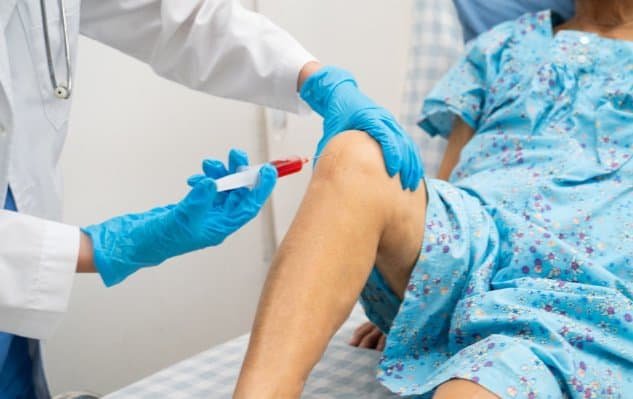
Regenerative alternatives include autologous treatments such as Platelet-Rich Plasma (PRP) and Bone Marrow Aspirate Concentrate (BMAC). Clinicians draw these from the patient’s own concentrated blood or bone marrow. They deliver high concentrations of natural growth factors directly to the injured joint or tendon. This approach avoids the risks of heavy metal toxicity and federal compliance issues while still augmenting tissue repair.
Ready to Accelerate Your Recovery?
The science of joint pain and musculoskeletal injury is advancing rapidly. Certain therapeutic peptides carry alluring promises—but they appear heavily marketed online. True healing requires a sophisticated, legally compliant, and personalized approach to regenerative medicine. You do not have to accept chronic pain or slow recovery as your new normal. You also do not have to risk your health on unregulated gray-market compounds.If you are an athlete or active individual struggling with joint pain, take the first step toward lasting recovery. Contact us today or book an appointment to discover how our evidence-based regenerative therapies and customized rehabilitation protocols can help you safely and effectively get back in the game.
Join Our Mailing List
Love what you’re reading? Don’t miss out on the latest insights, tips, and inspiration! Subscribe to our blog and get fresh content delivered straight to your inbox.
📬 Be the first to know.
💡 Gain valuable ideas.
🎉 Join a growing community of informed minds.
Fill out the form, submit, and let’s keep the conversation going.🌟
To help you stay on track with your wellness goals, check out these articles on how telehealth can make your journey even easier: